Event JSON
{
"id": "2cd3e087e3b9e4a4ad54045a03f012c7bfbe62d7b246d76186b13fb8a451f29f",
"pubkey": "058c93e803b26a00084fa8e8d397c80716b42889faaf05397e230f4aea2d35da",
"created_at": 1782140454,
"kind": 1,
"tags": [
[
"t",
"PPOD"
],
[
"t",
"space"
],
[
"t",
"science"
],
[
"imeta",
"url https://files.mastodon.social/media_attachments/files/116/794/356/715/044/468/original/b3f2a99107324333.jpeg",
"m image/jpeg",
"dim 1024x768",
"blurhash U20TXQj:ekaHbeaGf-kEVnaHkbkEozktfnZ{"
],
[
"proxy",
"https://mastodon.social/users/setiinstitute/statuses/116794356836799004",
"activitypub"
],
[
"client",
"Mostr",
"31990:6be38f8c63df7dbf84db7ec4a6e6fbbd8d19dca3b980efad18585c46f04b26f9:mostr",
"wss://relay.ditto.pub"
]
],
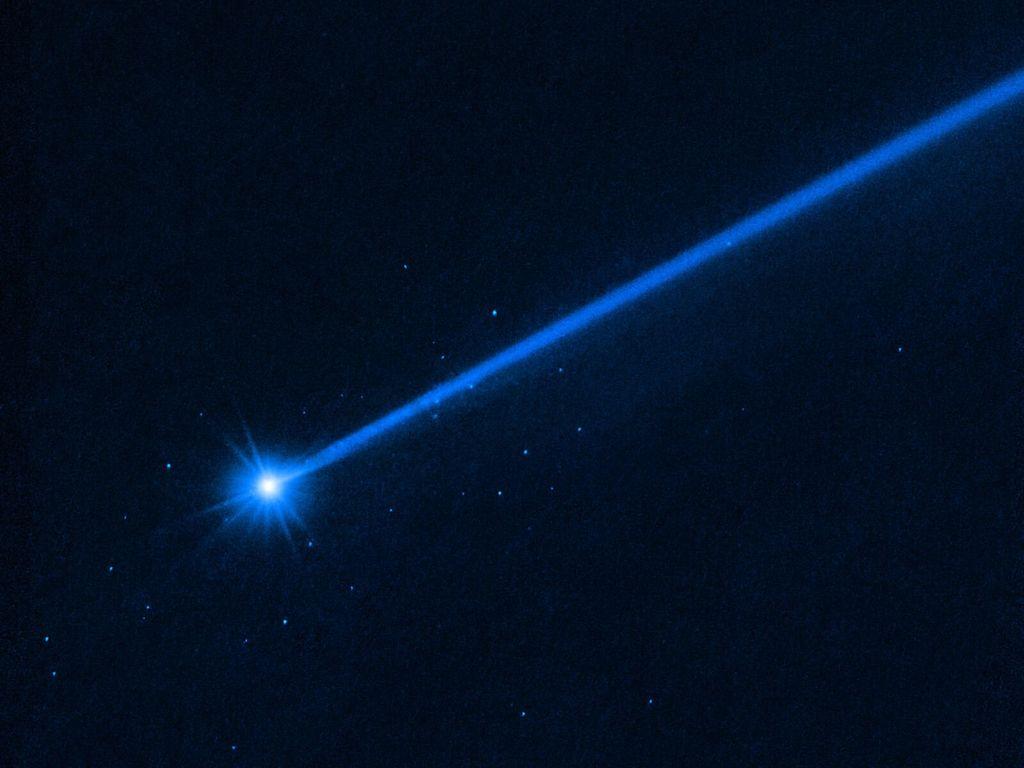
"content": "#PPOD: This NASA/ESA Hubble Space Telescope image of the asteroid Dimorphos was taken on 19 December 2022, nearly four months after the asteroid was impacted by NASA’s DART (Double Asteroid Redirection Test) mission. Hubble’s sensitivity reveals a few dozen boulders knocked off the asteroid by the force of the collision. These are among the faintest objects Hubble has ever photographed inside the Solar System. Credit: NASA, ESA, D. Jewitt (UCLA) \n\n#space #science\n\nhttps://files.mastodon.social/media_attachments/files/116/794/356/715/044/468/original/b3f2a99107324333.jpeg",
"sig": "f1a7476b6817441c5da953e4ac7ac38a74471057dde6e01be6b4795b709fb39397af51f87492284849e8f3e530c80a3a724c4f1953cd56d5c15fb9015fdfbc7b"
}