Event JSON
{
"id": "353edf84168f9e79566a2540777faebce390c1308770dd988b5f09a9d7bc8058",
"pubkey": "058c93e803b26a00084fa8e8d397c80716b42889faaf05397e230f4aea2d35da",
"created_at": 1790881329,
"kind": 1,
"tags": [
[
"t",
"PPOD"
],
[
"t",
"space"
],
[
"t",
"mars"
],
[
"imeta",
"url https://files.mastodon.social/media_attachments/files/117/367/198/644/424/701/original/88cca17761972352.jpeg",
"m image/jpeg",
"dim 2560x1920",
"blurhash U9Dcdo~o?aj^-:%KIWM}xpRjogIWkEE2t6t6"
],
[
"proxy",
"https://mastodon.social/users/setiinstitute/statuses/117367198792663502",
"activitypub"
],
[
"client",
"Mostr",
"31990:6be38f8c63df7dbf84db7ec4a6e6fbbd8d19dca3b980efad18585c46f04b26f9:mostr",
"wss://relay.ditto.pub"
]
],
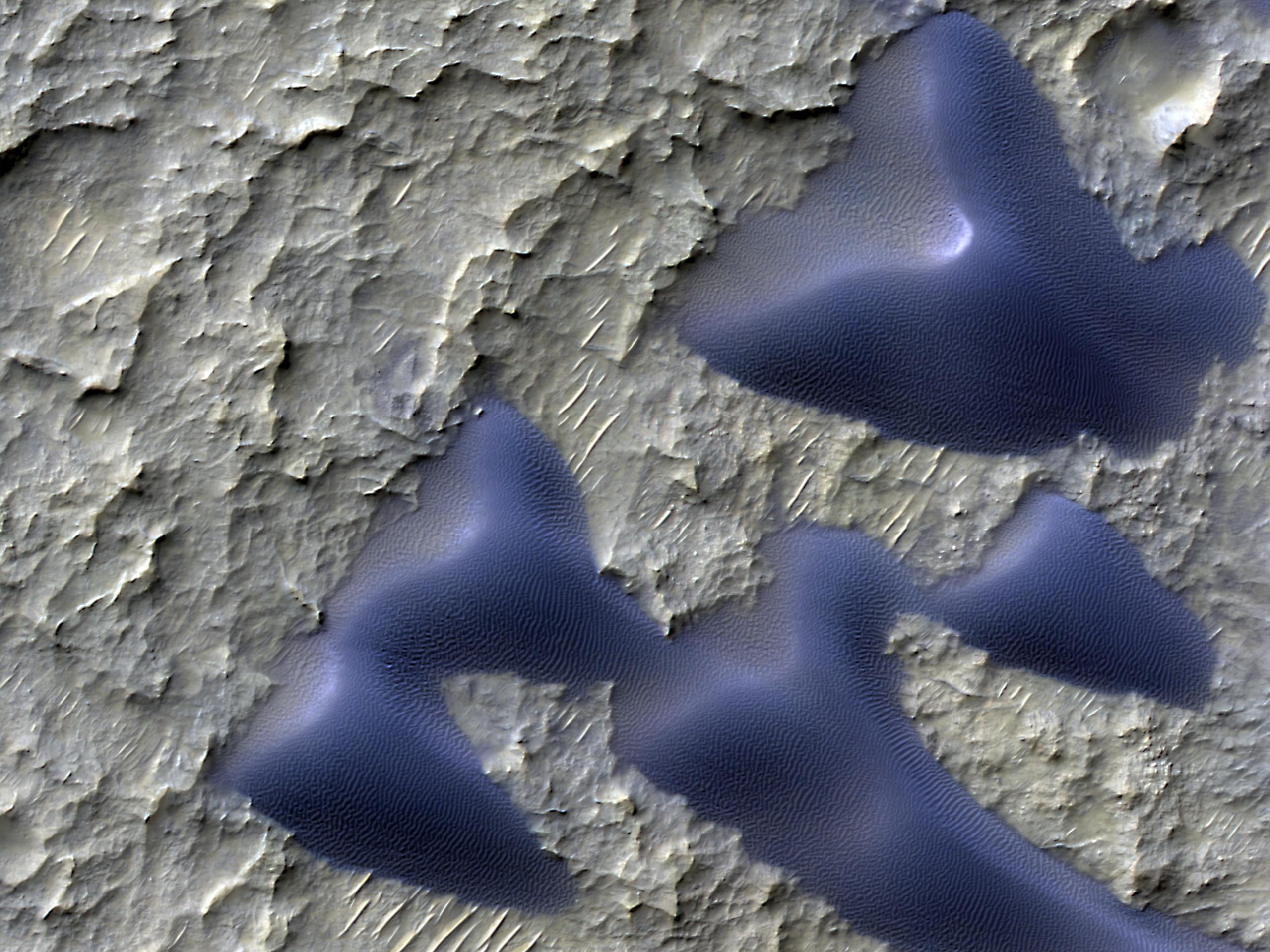
"content": "#PPOD: Dark dunes sweep across the floor of Schaeberle Crater in this HiRISE image from NASA’s Mars Reconnaissance Orbiter. Nearly 159 kilometers across, Schaeberle is a large impact crater in the southern hemisphere of Mars whose floor preserves evidence of very different periods in the planet’s geologic history. The pale, rough terrain is peppered with small impact craters, showing that the surface has been exposed for a long time. Credit: NASA/JPL-Caltech/University of Arizona\n\n#space #mars\n\nhttps://files.mastodon.social/media_attachments/files/117/367/198/644/424/701/original/88cca17761972352.jpeg",
"sig": "45ee91301ce3bd7b591f29bd48bf0bdbbf5cb75169b8fbc1ea3795f52fed811837ac266b5f660f6a75eee22f2831277660e141274a6c487db7b3d847291a472f"
}