h₃ = x₁∧x₅∧x₉ + x₂∧x₆∧x₇ + x₃∧x₄∧x₈
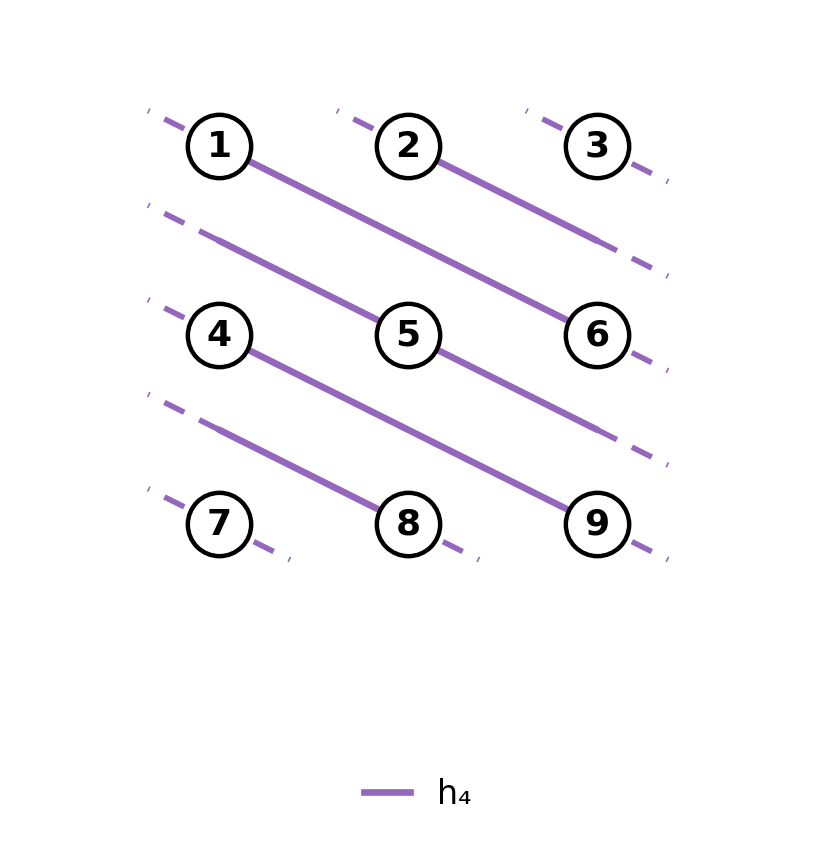
Compare this to the three parallel lines in the picture! These lines wrap around a lot, so it's a bit confusing, but they go through the points
1,5,9 2,6,7 3,4,8
respectively, and that explains
h₃ = x₁∧x₅∧x₉ + x₂∧x₆∧x₇ + x₃∧x₄∧x₈
So that's the pattern. But what's really going on here? It's rather deep, and so far I've just scratched the surface. So I'll refer you to Elashvili and Vinberg's paper for details. It's connected to the Lie group E8, and other very interesting things.
(7/n, n = 7)