Event JSON
{
"id": "2ed8ac8b88867f6a487f38627e7092be5ee0e6355c09a25f4e964a22ac6d269c",
"pubkey": "dfc732e7fc3b29ab95da9c7c2622ab93ff935f87139c557d14522c2f6a334426",
"created_at": 1741500013,
"kind": 1,
"tags": [
[
"imeta",
"url https://papers.moresci.sale/media_attachments/files/114/130/944/739/116/016/original/db61fadec643b596.jpg",
"m image/jpeg"
],
[
"proxy",
"https://moresci.sale/@birds/114130944881735109",
"web"
],
[
"proxy",
"https://moresci.sale/users/birds/statuses/114130944881735109",
"activitypub"
],
[
"L",
"pink.momostr"
],
[
"l",
"pink.momostr.activitypub:https://moresci.sale/users/birds/statuses/114130944881735109",
"pink.momostr"
],
[
"-"
]
],
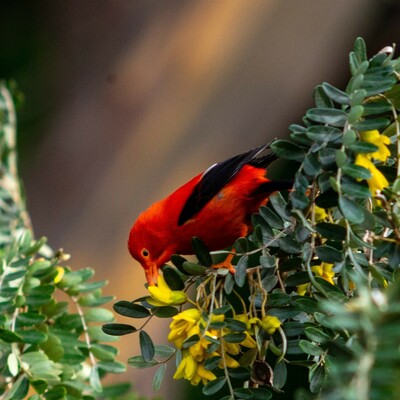
"content": "Red-collared Myzomela\n\nA small honeyeater of montane forest. Male unmistakeable with a black hood, belly, wings and tail, and a bright red breast, back, rump and collar. Female mainly brown (olive green in some areas), with a black throat, and reduced red on the chest and rump. The only myzomela at high elevations, but co-occurs with other species at middle elevations. Males are distinctive, this is the only female myzomela with a red chest and rump. An energetic and variable song, including up-and-down “tweepy-tweepy-tweepy” phrases with slightly electronic-sounding notes.\n\nLink: https://ebird.org/species/recmyz1\nPhoto Location: Indonesia\nhttps://papers.moresci.sale/media_attachments/files/114/130/944/739/116/016/original/db61fadec643b596.jpg\n",
"sig": "644d4990e8e4dfd4a3ac624e5c5beb6b4da5e9cbc9e7d65125cdf6d32878285fcddd577a215e7de6a244ccbeb4eb7974f4362a99e7558680362f419e5c1f8a83"
}