Event JSON
{
"id": "4836b093983044e89a550ab8fc4b062fcf233d683a9d03b00907d4a587a5a3d0",
"pubkey": "dfc732e7fc3b29ab95da9c7c2622ab93ff935f87139c557d14522c2f6a334426",
"created_at": 1742076014,
"kind": 1,
"tags": [
[
"proxy",
"https://moresci.sale/@birds/114168693714410036",
"web"
],
[
"imeta",
"url https://papers.moresci.sale/media_attachments/files/114/168/693/565/865/806/original/9456591162a4b22f.png",
"m image/png"
],
[
"proxy",
"https://moresci.sale/users/birds/statuses/114168693714410036",
"activitypub"
],
[
"L",
"pink.momostr"
],
[
"l",
"pink.momostr.activitypub:https://moresci.sale/users/birds/statuses/114168693714410036",
"pink.momostr"
],
[
"-"
]
],
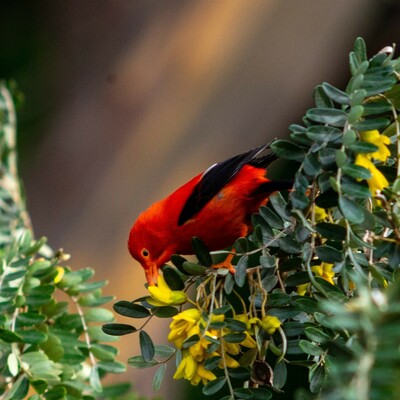
"content": "Blue Bunting\n\nUnobtrusive small bird of brushy woodland and forest understory in tropical lowlands, mainly in drier habitats. Usually seen as singles or pairs, low in weedy growth. Male blue-black overall; with good views, note the blue forehead, ‘jowls,’ and rump. Female in West Mexico gray-brown overall, in East Mexico rich brown overall. Similar female Varied Bunting has a smaller bill and different call note: a wet plik; Blue Bunting call is a high tsik in West Mexico, a metallic chink in East Mexico.\n\nLink: https://ebird.org/species/blubun\nPhoto Location: United States\nhttps://papers.moresci.sale/media_attachments/files/114/168/693/565/865/806/original/9456591162a4b22f.png\n",
"sig": "112b7dc26e13889565d181bc5fbaf72da6922f3fe309376be391dfa076df830a5b5f2c460038736dc40d9d5816e942c40163d03d90d1d419ce1deebcd95e4fc7"
}