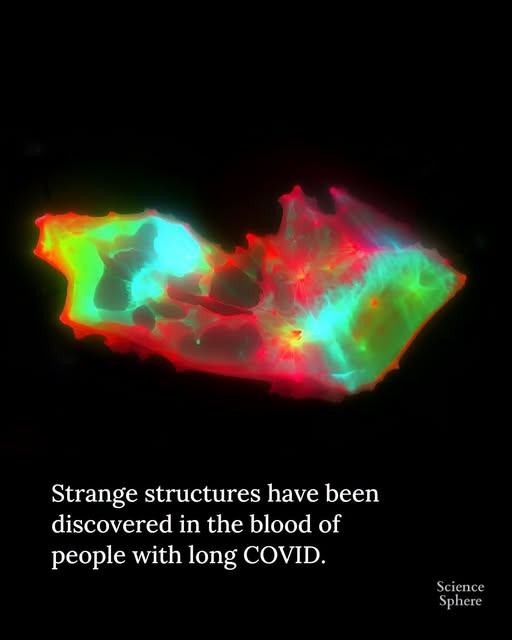
>Scientists have found tiny clumps of clotting proteins tangled with immune-cell material in blood samples from people with long COVID.
>The finding offers a possible clue to an illness that can leave people with fatigue, brain fog and other symptoms long after their initial infection.
>Researchers compared blood samples from 50 people with long COVID and 38 healthy volunteers. The long COVID group had a median microclot count about 20 times higher, and the clumps were also larger.
These “microclots” are abnormal clusters of blood-clotting proteins. The team examined them using techniques that combine detailed imaging with measurements of particles in blood samples.
They also investigated neutrophil extracellular traps, or NETs: sticky webs of DNA and enzymes released by certain white blood cells to trap invading microbes.
These webs help defend the body, but excessive or persistent NET formation can contribute to inflammation and clotting problems.
Microscope images showed NET material associated with the microclots. This connection appeared in healthy samples too, but was much more pronounced in samples from people with long COVID.
The researchers suggest that this interaction could help microclots resist the body’s normal breakdown process. Whether that contributes directly to patients’ symptoms remains uncertain.
A machine-learning model distinguished the two groups with about 91% accuracy within the study. However, this is not yet a validated diagnostic test.
The study was small and observational, and lacked comparison groups with other illnesses that can produce similar blood changes. Larger studies are needed to establish how specific these findings are to long COVID and whether targeting them helps patients.
📃 RESEARCH PAPER
📌 Thierry et al., “Circulating Microclots Are Structurally Associated With Neutrophil Extracellular Traps and Their Amounts Are Elevated in Long COVID Patients,” Journal of Medical Virology (2025).