Event JSON
{
"id": "6725f8e027e267e544a966870265ccf28cd4a42feeacf7d9f9e16d9eb094b3b1",
"pubkey": "dfc732e7fc3b29ab95da9c7c2622ab93ff935f87139c557d14522c2f6a334426",
"created_at": 1787950816,
"kind": 1,
"tags": [
[
"imeta",
"url https://papers.moresci.sale/media_attachments/files/117/175/144/498/149/907/original/e317ad48e96f7d4b.jpg",
"m image/jpeg"
],
[
"proxy",
"https://moresci.sale/@birds/117175144729426709",
"web"
],
[
"proxy",
"https://moresci.sale/users/birds/statuses/117175144729426709",
"activitypub"
],
[
"L",
"pink.momostr"
],
[
"l",
"pink.momostr.activitypub:https://moresci.sale/users/birds/statuses/117175144729426709",
"pink.momostr"
],
[
"-"
]
],
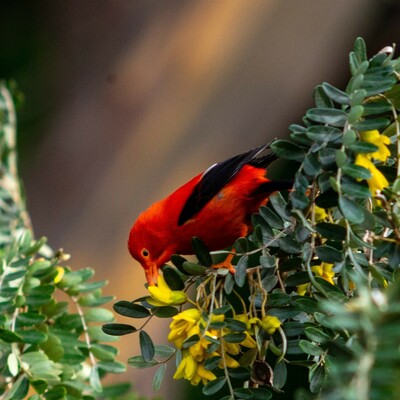
"content": "Jackal Buzzard\n\nA large, heavy buzzard with striking black, chestnut, and white patterning that is especially evident in flight. Occupies a wide range of open habitats, where it sits on poles, fences, and rocks hunting for small and large vertebrates. The harsh scolding “kaaaa-haa-haa” call is distinctive and similar to that of a jackal. A rare pale-chested morph can resemble Augur Buzzard, but Jackal Buzzard is always differentiated by the dark (not pale) forward part of the underwing. The brown-and-rufous juvenile Jackal Buzzard is similar to other buzzards, but it is larger, with broad wings and a hefty head.\n\nLink: https://ebird.org/species/jacbuz1\nPhoto Location: South Africa\nhttps://papers.moresci.sale/media_attachments/files/117/175/144/498/149/907/original/e317ad48e96f7d4b.jpg\n",
"sig": "a512769d36c8b202b140011eaaefb8cd3121b618d075986814824845b2d71878354aa49c946a055f14e85d4a0a3901211dd105dc7eaa96017bc93e2d5c590066"
}