Event JSON
{
"id": "6b6218d127d06eaacfe75cbabf0a703a45188175c24e73352dd7b3edbf22a76a",
"pubkey": "73a16c4c33c272b3045245646ccb7c182bf455fb7ba22dd66950cd7911e6ef09",
"created_at": 1761761397,
"kind": 1,
"tags": [
[
"t",
"farming"
],
[
"t",
"foodsecurity"
],
[
"imeta",
"url https://cdn.masto.host/urbanistssocial/media_attachments/files/115/458/740/858/195/759/original/4c7d39c943661337.png",
"m image/png"
],
[
"t",
"agriculture"
],
[
"proxy",
"https://urbanists.social/@MissGayle/115458794947288643",
"web"
],
[
"t",
"gardening"
],
[
"proxy",
"https://urbanists.social/users/MissGayle/statuses/115458794947288643",
"activitypub"
],
[
"L",
"pink.momostr"
],
[
"l",
"pink.momostr.activitypub:https://urbanists.social/users/MissGayle/statuses/115458794947288643",
"pink.momostr"
],
[
"-"
]
],
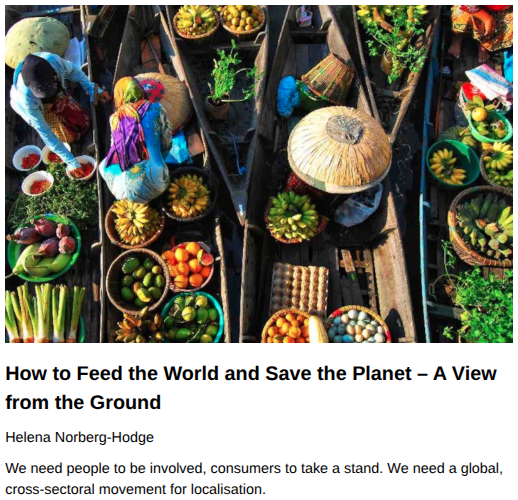
"content": "\"Localised farms are not monocultures sprayed with chemicals – they’re mosaics of life. They also produce much more food per acre – often five times as much – than industrial farms. With local markets as their economic cornerstone, diversified farms can bring back biodiversity, rebuild topsoil, and restore watersheds in diverse landscapes...\n\nWe can’t leave it to blinkered economists and politicians.\"\n\nNo indeed.\n\nLink: https://www.resilience.org/stories/2025-10-29/how-to-feed-the-world-and-save-the-planet-a-view-from-the-ground/\n\n#Agriculture #FoodSecurity #Farming #Gardening\nhttps://cdn.masto.host/urbanistssocial/media_attachments/files/115/458/740/858/195/759/original/4c7d39c943661337.png\n",
"sig": "b510d0c64048bf6224479e1cc9781d52e0c7bde1562f3ab36af1209822e73bb90e8bc49d5b10d60f311c64cf82b0aa737bcaf188941c39178526af8657b9f329"
}