Event JSON
{
"id": "6971fbce2fd9e0ada3c6fb078cf4234863bf29ef7ca2139683b79ba29ce98e26",
"pubkey": "b2ecb8cb96bc62df25c5847725e90b0e21dc0afc7adcc51eb2746527da9392eb",
"created_at": 1788974867,
"kind": 1,
"tags": [
[
"imeta",
"url https://cdn.masto.host/urbanistssocial/media_attachments/files/117/242/254/354/523/100/original/c6a8699b73d8ac20.png",
"m image/png"
],
[
"t",
"quebec"
],
[
"proxy",
"https://urbanists.social/@straphanger/117242256938476932",
"web"
],
[
"proxy",
"https://urbanists.social/users/straphanger/statuses/117242256938476932",
"activitypub"
],
[
"L",
"pink.momostr"
],
[
"l",
"pink.momostr.activitypub:https://urbanists.social/users/straphanger/statuses/117242256938476932",
"pink.momostr"
],
[
"-"
]
],
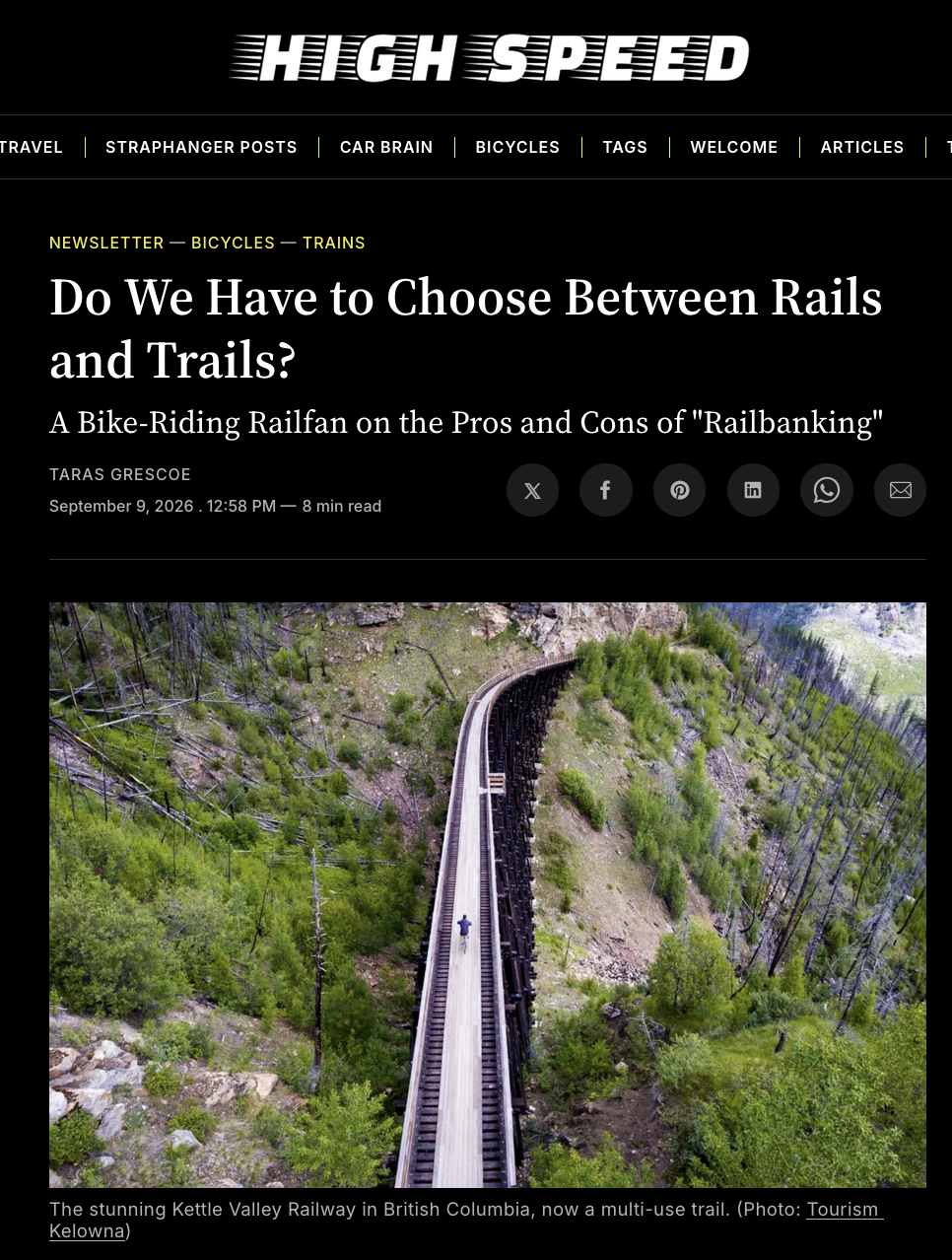
"content": "Railway corridor, or bike path?\n\nI was torn about the best use of this old Canadian Pacific line, which I rode between Wakefield and Chelsea, in rural #Quebec.\n\nBut don't get me wrong—I love cycling these old railway lines! \n\nThe question is, can rails and trails co-exist? I take a look in this week's HIGH SPEED dispatch:\n\nhttps://www.highspeed.blog/do-we-have-to-choose-between-rails-and-trails/\nhttps://cdn.masto.host/urbanistssocial/media_attachments/files/117/242/254/354/523/100/original/c6a8699b73d8ac20.png\n",
"sig": "63ec045b0bcc3f0aebcdb1c3c43cee4395f74d402b49872322127e376df450cff9c060e07a78742f184eeb1269023a310a1283d007835722be4e3237e1879894"
}