Event JSON
{
"id": "67c718b8e5b1daaddb3c123816583f79906da966a2700bd82fb8776467eee7bb",
"pubkey": "dfc732e7fc3b29ab95da9c7c2622ab93ff935f87139c557d14522c2f6a334426",
"created_at": 1780866018,
"kind": 1,
"tags": [
[
"imeta",
"url https://papers.moresci.sale/media_attachments/files/116/710/835/243/600/438/original/964badf0d4129370.jpg",
"m image/jpeg"
],
[
"proxy",
"https://moresci.sale/@birds/116710835361789579",
"web"
],
[
"proxy",
"https://moresci.sale/users/birds/statuses/116710835361789579",
"activitypub"
],
[
"L",
"pink.momostr"
],
[
"l",
"pink.momostr.activitypub:https://moresci.sale/users/birds/statuses/116710835361789579",
"pink.momostr"
],
[
"-"
]
],
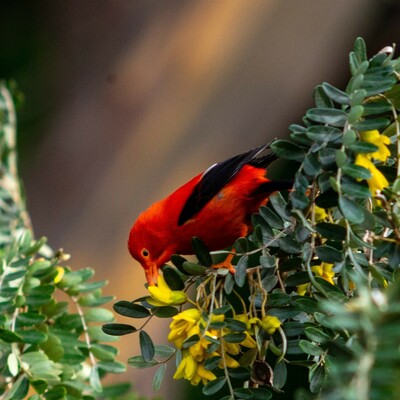
"content": "Small-billed Tinamou\n\nSmall unobtrusive tinamou, which can be locally common in grasslands, savanna, and agricultural areas. Striking red bill and legs are its most notable features, otherwise largely gray with a brown back and scalloped vent. Similar Tataupa Tinamou has purple legs. The song is a long, descending trill of “trii” notes that finishes with a low “truuu truuu truuu” which can be heard all day. Sometimes just the last notes are sung.\n\nLink: https://ebird.org/species/smbtin1\nPhoto Location: Brazil\nhttps://papers.moresci.sale/media_attachments/files/116/710/835/243/600/438/original/964badf0d4129370.jpg\n",
"sig": "2c9411915c550f07356258c8203def560119de1751b589b2d5f860c5d7b9616745bd8ecc4138bc87867fdf959ab26c40b68d292cd10cf781fadf0905e130fead"
}