Event JSON
{
"id": "e44a186f2e37a693bc24902cee69a21f9ab09461b01e9a49958eaeab81d8238d",
"pubkey": "5ffc121442bd852db9222170e588a987eb298275c4ebc14702555bd3eab63097",
"created_at": 1780923606,
"kind": 1,
"tags": [
[
"t",
"annotation"
],
[
"imeta",
"url https://w3csocial.files.fedi.monster/media_attachments/files/116/714/609/368/846/162/original/b6fa4ae2c8736a76.png",
"m image/png"
],
[
"t",
"i18n"
],
[
"proxy",
"https://w3c.social/@w3c/116714609466747030",
"web"
],
[
"t",
"webstandards"
],
[
"proxy",
"https://w3c.social/users/w3c/statuses/116714609466747030",
"activitypub"
],
[
"L",
"pink.momostr"
],
[
"l",
"pink.momostr.activitypub:https://w3c.social/users/w3c/statuses/116714609466747030",
"pink.momostr"
],
[
"-"
]
],
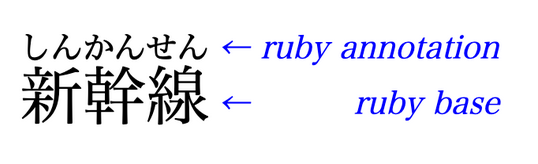
"content": "The Internationalization Working Group has published HTML Ruby Markup Extensions as a W3C Candidate Recommendation Snapshot. \n\nRuby, a form of interlinear annotation, are short runs of text alongside the base text. They are typically used in East Asian documents to indicate pronunciation or to provide a short annotation. This specification revises and extends the markup model established by HTML to express ruby. \nhttps://www.w3.org/news/2026/w3c-invites-implementations-of-html-ruby-markup-extensions/\nextensions/\n#i18n #Annotation #WebStandards\nhttps://w3csocial.files.fedi.monster/media_attachments/files/116/714/609/368/846/162/original/b6fa4ae2c8736a76.png\n",
"sig": "2f7d27e9fc9a07c1ac260ca357672415a5b3604e8aed24d34b9a0bf9555d22b4b36df9d6bfa9aa99a79ab8d7cb647d4488e77a6a8d37b8d5325626b3a76bfe5d"
}