Event JSON
{
"id": "ed5fe97440b89a8142ce24c1364233264d32145589a189ffa6f9fe4167748c3e",
"pubkey": "b54d3e47830f0bcfb61f735cb67d6093f8f1372ecdde9f0c99150f2c0d402fbf",
"created_at": 1752029049,
"kind": 1,
"tags": [
[
"imeta",
"url https://media.infosec.exchange/infosec.exchange/media_attachments/files/114/820/956/459/961/522/original/5eae15ea5c433943.png",
"m image/png"
],
[
"t",
"language"
],
[
"t",
"writing"
],
[
"t",
"lancashire"
],
[
"proxy",
"https://infosec.exchange/@lorry/114820975775213411",
"web"
],
[
"t",
"education"
],
[
"t",
"poor"
],
[
"t",
"schools"
],
[
"t",
"pittman"
],
[
"t",
"english"
],
[
"t",
"gb"
],
[
"t",
"kids"
],
[
"t",
"phonetics"
],
[
"t",
"uk"
],
[
"t",
"ita"
],
[
"proxy",
"https://infosec.exchange/users/lorry/statuses/114820975775213411",
"activitypub"
],
[
"L",
"pink.momostr"
],
[
"l",
"pink.momostr.activitypub:https://infosec.exchange/users/lorry/statuses/114820975775213411",
"pink.momostr"
],
[
"-"
]
],
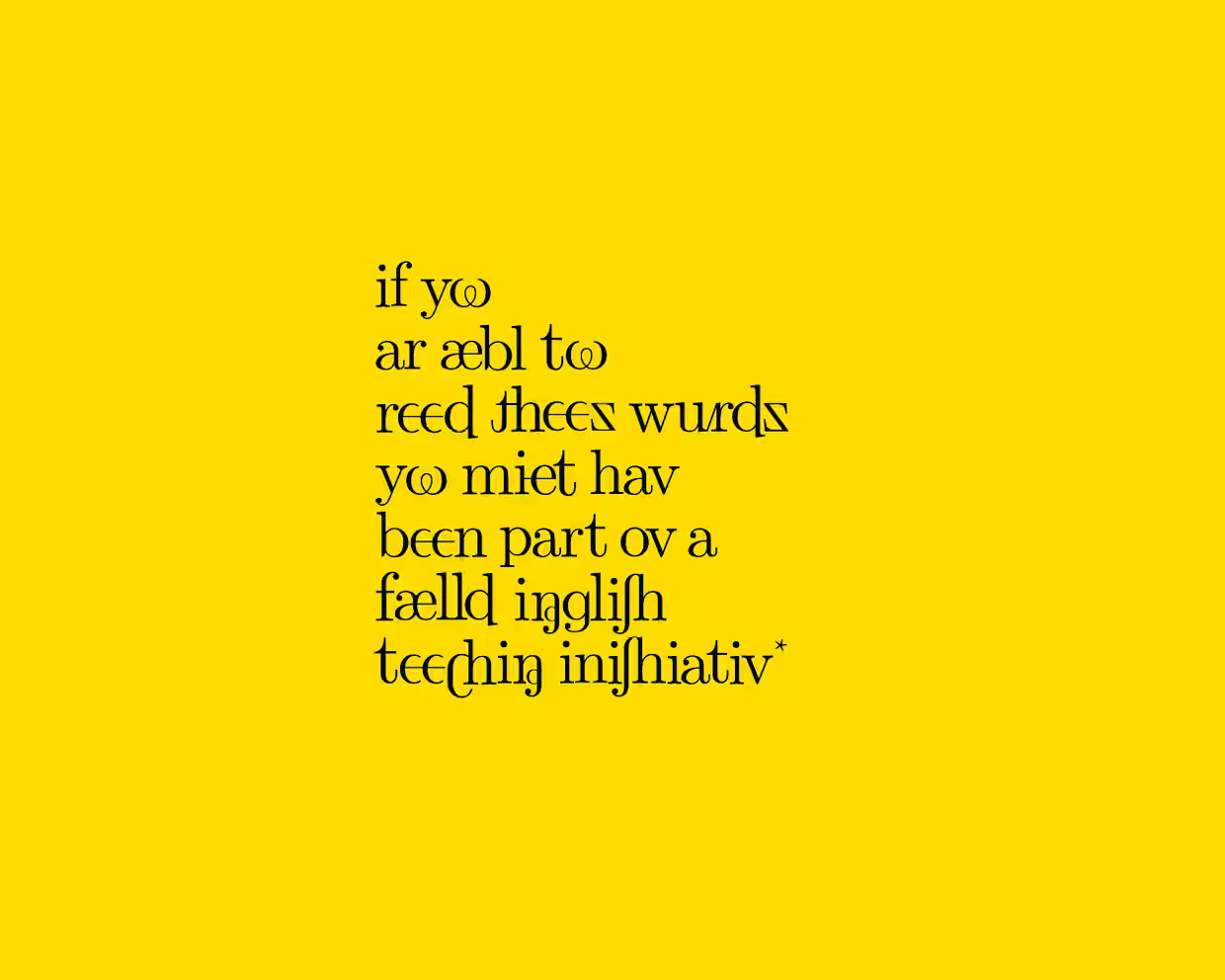
"content": "This is interesting to me, at least. It looks like they trialled this in poorer areas of the country, so mostly I see Lancashire in the article, but also Plymouth; possibly places where kids wouldn't be expected to have access to books at home?\n\nI went to school at a very early age, to a day-boarding school. They taught ITA and normal English together, I think, at least, I could read normal English, but I thought in ITA and still do. \n\nIf you ask me to spell something, I spell it in my head in the phonetic alphabet (ah, bu, ker, der, eh, pff, ger) and I have a mostly instinctive translation mechanism that translates it to normal English style before I speak it; except when I have to actually think about the spelling, and split my brain, then it comes out phonetically, I have to experiment with the spelling in phonetics before I can convert - I just can't think in normal English.\n\nI am not sure it messed me up much. I have learned to spell, but some words don't make sense to me (which is just English), and some I am stubborn about. \n\nI also collect ITA books now, the first one I got after 50 years or so, I realised I could read perfectly. I'd never thought about what happened to ITA, maybe I was lucky that I used both and wasn't suddenly hit with a whole new reading language; but I do wonder where it went, and when I stopped using it. \n\nhttps://www.theguardian.com/education/2025/jul/06/1960s-schools-experiment-created-new-alphabet-thousands-children-unable-to-spell\n\n#English #Writing #Education #ITA #Pittman #Phonetics #Schools #UK #GB #Lancashire #Poor #Kids #Language\nhttps://media.infosec.exchange/infosec.exchange/media_attachments/files/114/820/956/459/961/522/original/5eae15ea5c433943.png\n",
"sig": "5082d5a283508dcaff442636329dc25a6bc4d755001429b475f60dcbd36eee3a0dd47507c4a53b4d9efe7187a2dff607cba05fef0de212cd7192bfaff5561cb1"
}