Event JSON
{
"id": "c0cc5a1ec3a9248a80d2177d6109d199b61c2a9907b03b83ad4c5b7ff0763025",
"pubkey": "f06c0d239b29f2884d1a345bd1e120125610976d968e6002bb324116b70fc39e",
"created_at": 1726590906,
"kind": 1,
"tags": [
[
"proxy",
"https://m.universetoday.com/@fraser/113153861634989967",
"web"
],
[
"imeta",
"url https://m.universetoday.com/system/media_attachments/files/113/153/861/620/498/472/original/8a841f33d6d21057.jpeg",
"m image/jpeg"
],
[
"proxy",
"https://m.universetoday.com/users/fraser/statuses/113153861634989967",
"activitypub"
],
[
"L",
"pink.momostr"
],
[
"l",
"pink.momostr.activitypub:https://m.universetoday.com/users/fraser/statuses/113153861634989967",
"pink.momostr"
],
[
"-"
]
],
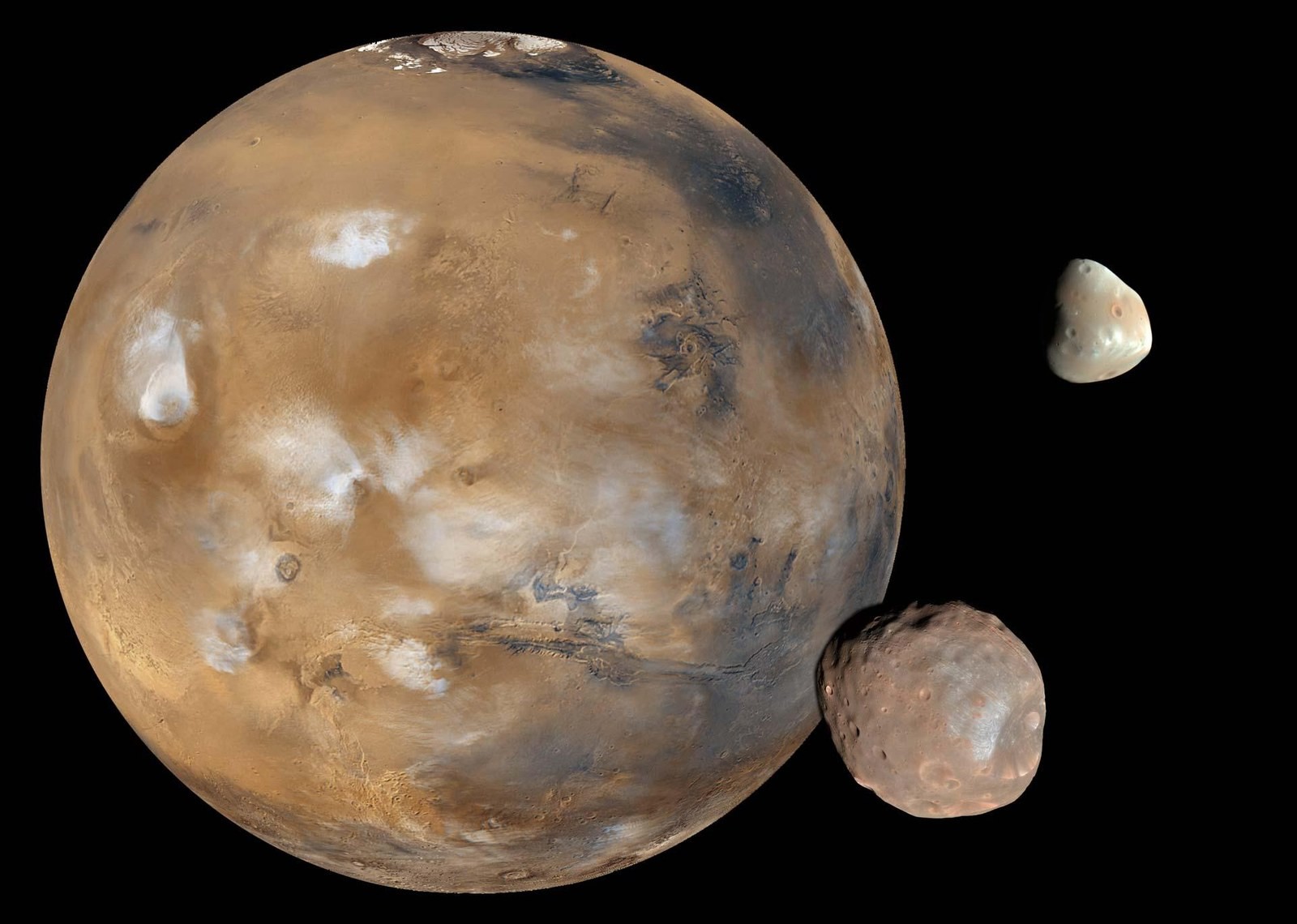
"content": "Mars has two small moons: Phobos and Deimos. But did it have a larger third moon in the past? In a new paper, a researcher proposes that a massive moon could help explain an outstanding puzzle about the shape of Mars. The planet has a \"triaxial\" shape, which means it doesn't just share the oblate spheroid shape of Earth and other rotating planets; it bulges out in a third axis. A massive moon could have distorted Mars into this shape, and then the moon was lost.\n\nhttps://arxiv.org/abs/2408.14725\nhttps://m.universetoday.com/system/media_attachments/files/113/153/861/620/498/472/original/8a841f33d6d21057.jpeg\n",
"sig": "dd98fdab2ef0b08276f0fc70b33933c6fde770bd527d3c52c15fc3463424cf862c3ffd914f5534dfd0cf22441d4bdfd9558bf709f2ecc34f12e3b6fb311cc340"
}