Event JSON
{
"id": "15acce1e165fd819106d741f806bf5708e93f7ae56218b2ee426765d02bf9886",
"pubkey": "a01bf902d79eb7b0126f5e72ee69e1197080d7db90cb27bc45e86dfe8868b2e1",
"created_at": 1792665821,
"kind": 1,
"tags": [
[
"t",
"space"
],
[
"proxy",
"https://mastodon.world/@formuchdeliberation/117484147289605420",
"web"
],
[
"t",
"universe"
],
[
"t",
"largemagellaniccloud"
],
[
"t",
"galaxies"
],
[
"t",
"milkyway"
],
[
"imeta",
"url https://s3.eu-central-2.wasabisys.com/mastodonworld/media_attachments/files/117/484/135/774/538/579/original/1d8be6198ccbaf26.png",
"m image/png"
],
[
"t",
"stars"
],
[
"proxy",
"https://mastodon.world/users/formuchdeliberation/statuses/117484147289605420",
"activitypub"
],
[
"L",
"pink.momostr"
],
[
"l",
"pink.momostr.activitypub:https://mastodon.world/users/formuchdeliberation/statuses/117484147289605420",
"pink.momostr"
],
[
"-"
]
],
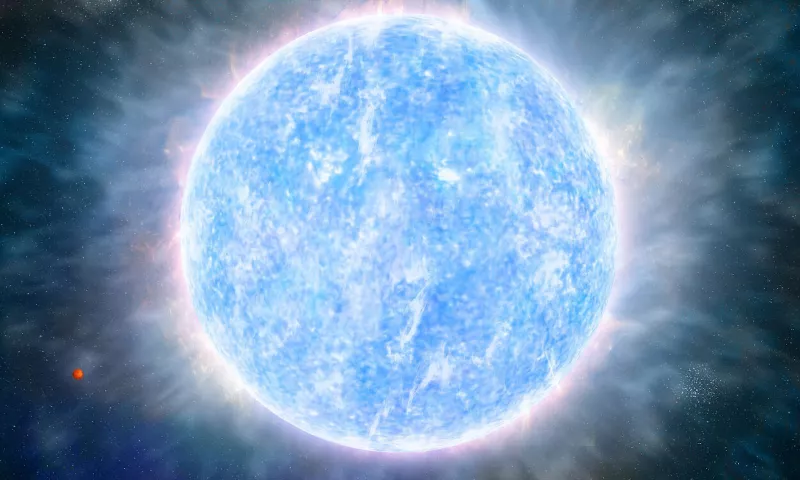
"content": "The Most Massive Star?\nDid You Know?\n\nR136a1 is the most massive star, which is 300 times as massive as our sun. \n \nRMC 136a1, abbreviated as R136a1, lies about 163,000 light-years from Earth in the Tarantula Nebula. This massive star lies outside our galaxy; it's part of the Large Magellanic Cloud, one of the Milky Way's satellite galaxies...\n\n#universe #stars #LargeMagellanicCloud #milkyway #galaxies #space\nhttps://s3.eu-central-2.wasabisys.com/mastodonworld/media_attachments/files/117/484/135/774/538/579/original/1d8be6198ccbaf26.png\n",
"sig": "617b78f6b91486287104c06527bdb0b6486dbf996a4e643636a3845f85d63743ddcac3076fd6b44202db36e385b8c552716486b1d4dbf795150ed06bb129da70"
}