Spiders do not bite: a conspiracy (Part 1)
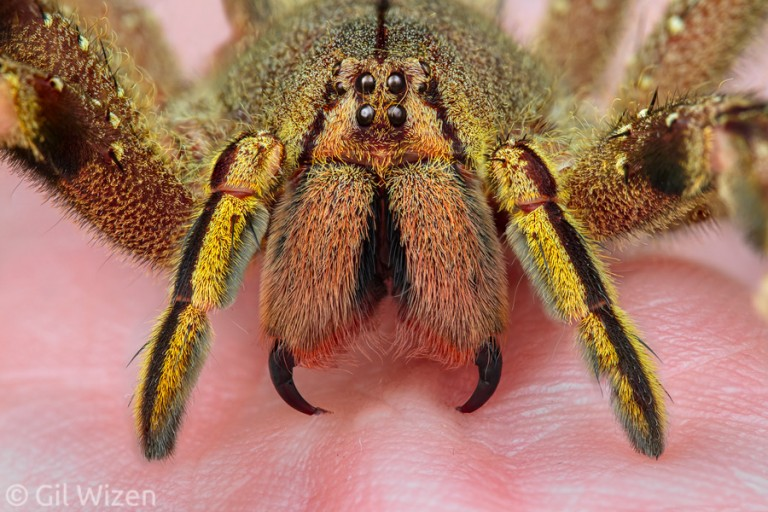
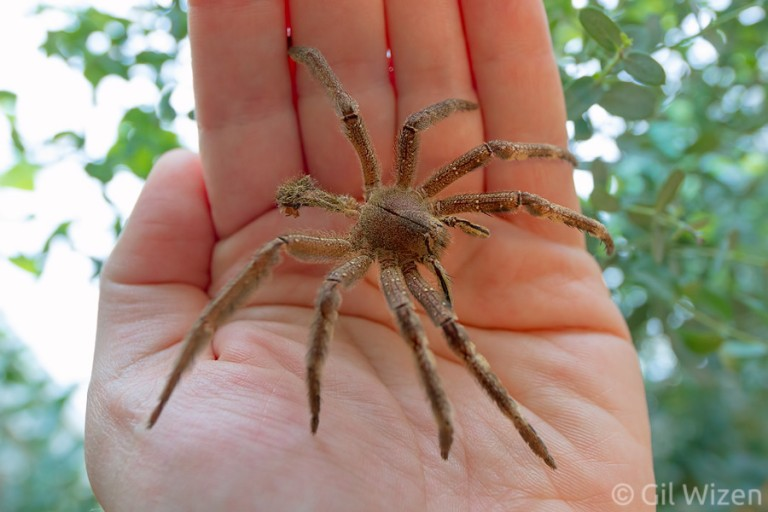
Photo 1 was staged by Gil Wizen(1,2). Using a molt of a Brazilian Wandering Spider, he made it look like he was being attacked. Curiously, can you find a real video or photo that shows, beyond a reasonable doubt, someone being bitten by a spider?
You can do it for almost any animal. you can even easily find videos of insects as innocuous as locus and cicadas biting people, but spiders? Very few, and almost none are convincing. I don't actually believe anyone's been bitten by one (within certain caveats).
So you googled it now, and this picture of a person getting attacked by a huntsman spider came up(3). This image might be real, but again, these photos are easy to stage as previously shown. Honestly, getting a photo of the exact moment a spider bites like this would be crazy hard to pull off.
Searching YouTube for videos of it gives sparse results at best. For example, Here is one where a guy is not even sure if he was bitten. Think about that, he couldn't tell. If anything, he psyched himself into thinking he was attacked. (watch?v=4yV2XI5C3JU)
Then there’s this one. Is it a bite? Seems like an attempt was made. But it not only didn't it hurt, he laughed. (Remember this one, it'll be important later.) (watch?v=gpNh5nmoSZ8)
This looks like a near bite, but then it let go when it realized he was not food. Notice how it ignored his finger afterwards. You should also notice that these are all fairly large spiders so far. Are you still afraid of that little jumping spider? (watch?v=f6LPrD7eCwY)
"Okay!? But how about this one!?" Actually, this is not a bite. Let me explain (watch?v=DQvoVGMonKg)
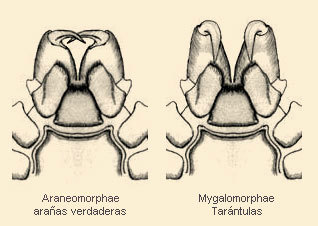
First, watch as they struggle to get the spider to bite him after insisting that it was "pissed off". To really understand what really happened, you need to understand spider mouths. Spiders diverged into two groups millions of years ago, the difference being in their mouths. They can have one of two types of "mouths". The most common is the Araneomorphae. Basically, their "mouths" swig side to side, and they "pinch" their prey. Most spiders fall into the group today. The other type is primative Mygalomorphae. They move up and down. (Also, spider fangs are no more a mouth than your teeth are). These are rarer, usually only Tarantulas and other ground spiders are like this.(3)
Since Mygalomorphae fangs move up and down, they can actually use them to help them move or to hold onto something (like if they are falling, which is dangerous for them). What you are seeing is the spider trying to move. It's legs are restrained, and so it's trying to use its powerful mouth to move.
Not only that, we cannot properly bite when held like this! A true bite by a Mygalomorphae requires a full upward motion of its body. Basically, they were being chewed on in a struggle to escape.
That said, a Mygalomorphae can bite you if it wanted to, and whether it's from mechanical tearing, or from the poison of the Funnel Web, it is a painful bite. But remember how I said spiders diverged millions of years ago? Araneomorphae are also known as "true spiders", while Mygalomorphae are not. Are they still considered spiders? Yeah kinda. Is this a cope? Kinda, but it's the best kind of cope.
But what about Araneomorphae? Sometimes true spiders do bite in this position. Here is a video of a man intentionally getting bitten by a woodlouse spider. The thing to notice, again, is how this bite occurs. He had to press it against his skin. (watch?v=Lz6pirQT_5o)
This is actually how nearly all real "bites" occur. Often, they are trapped and put in a situation where their fangs pierce the skin through external pressure. It's like literally walking into someone else's sword.