Event JSON
{
"id": "597fed94c2b69bf84f2904e50c22b56c47312a377afd276b4e3093295a500d02",
"pubkey": "dfc732e7fc3b29ab95da9c7c2622ab93ff935f87139c557d14522c2f6a334426",
"created_at": 1758229211,
"kind": 1,
"tags": [
[
"imeta",
"url https://papers.moresci.sale/media_attachments/files/115/227/309/510/740/819/original/0fde87101d742292.jpg",
"m image/jpeg"
],
[
"proxy",
"https://moresci.sale/@birds/115227309603552043",
"web"
],
[
"proxy",
"https://moresci.sale/users/birds/statuses/115227309603552043",
"activitypub"
],
[
"L",
"pink.momostr"
],
[
"l",
"pink.momostr.activitypub:https://moresci.sale/users/birds/statuses/115227309603552043",
"pink.momostr"
],
[
"-"
]
],
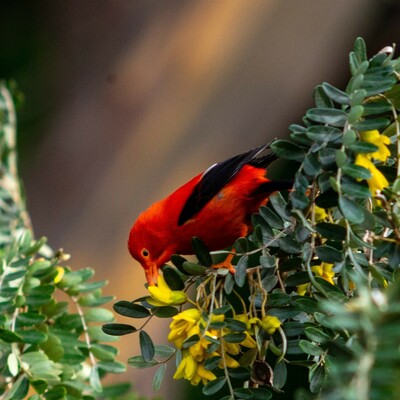
"content": "California Quail\n\nSmall and rotund with obvious teardrop-shaped plumes protruding from forehead. Looks gray and brown at a distance, with white streaks on the sides and a scaly belly. Males have black face and longer, more curled crest than females. Usually seen in flocks running on the ground in open, scrubby habitats. Listen for frequent, three-noted call, audible at long distances. Separated from similar Gambel’s Quail by range; also note California has scaly belly with rusty (not black) patch and duller brown crown and sides. Native to western North America including Baja California; well-established introduced populations in Chile, Argentina, New Zealand, and Hawaii.\n\nLink: https://ebird.org/species/calqua\nPhoto Location: United States\nhttps://papers.moresci.sale/media_attachments/files/115/227/309/510/740/819/original/0fde87101d742292.jpg\n",
"sig": "aee7a41bc66db38cb54fe59505ab034d82303d34fae837a3a19322c6b39780d17a28559087a4134d2326a3b2ea9089410d62e0f1ce59b53e2db7df0891ad6815"
}