Event JSON
{
"id": "f33f1b93f2e9539317d8fd0d5893701769d8261b492ac89f3c5659f74bb803f9",
"pubkey": "dfc732e7fc3b29ab95da9c7c2622ab93ff935f87139c557d14522c2f6a334426",
"created_at": 1764828008,
"kind": 1,
"tags": [
[
"proxy",
"https://moresci.sale/@birds/115659768392854971",
"web"
],
[
"imeta",
"url https://papers.moresci.sale/media_attachments/files/115/659/768/329/615/682/original/0673fe7c6dc9ba03.jpg",
"m image/jpeg"
],
[
"proxy",
"https://moresci.sale/users/birds/statuses/115659768392854971",
"activitypub"
],
[
"L",
"pink.momostr"
],
[
"l",
"pink.momostr.activitypub:https://moresci.sale/users/birds/statuses/115659768392854971",
"pink.momostr"
],
[
"-"
]
],
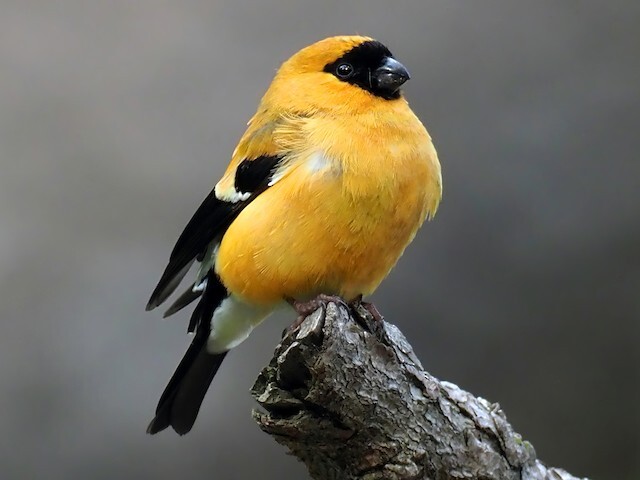
"content": "Orange Bullfinch\n\nA small, brightly colored bullfinch. The male is orange with black mask, wings, and tail. The female is similar but duller, with gray behind the neck, a pale brown back, and yellow-brown underparts. Found in open conifer forests. Uses its stubby bill to look for berries, buds, and seeds as it forages on the ground. The song is a pleasant jumble of short, mellow whistles and fluting notes. The call includes soft “tew” notes delivered in ones and twos.\n\nLink: https://ebird.org/species/orabul1\nPhoto Location: India\nhttps://papers.moresci.sale/media_attachments/files/115/659/768/329/615/682/original/0673fe7c6dc9ba03.jpg\n",
"sig": "e35afd709ff1fafbd9528eeb3b49576a52b38a4e9a9901bfcd1fa56e79667ebd64cee8b84edb1d1a424b5903bfcc5b095e1e8579b1f3dc76f04a38fea5461417"
}